principal4jd@gmail.com +91 86184 17475
Alumni

Department of Artificial Intelligence & Machine Learning

Home > Department of Artificial Intelligence & Machine Learning >About the department

About the department

The Department of Artificial Intelligence and Machine Learning was established in the academic year 2024–2025 with an intake of 60 students. The department is supported by a team of well-qualified, experienced, and dedicated faculty members who are committed to delivering quality education and fostering academic excellence.

The department is equipped with modern infrastructure, including well-established laboratories that facilitate the effective implementation of academic programs. It also features a departmental library with a wide collection of books, journals, and research articles to support students’ learning and knowledge enhancement.

A strong and active departmental forum AIFORGE plays a vital role in the holistic development of students by organizing various technical workshops, symposiums, and expert talks on emerging technologies such as Selenium with C programming, Python, and Algorithms. Students are also encouraged to actively participate in co-curricular, extracurricular, and sports activities conducted throughout the year, helping them build a well-rounded skill set.

The department provides a unique platform for students to explore innovation, product development, startups, and entrepreneurship. Additionally, the faculty members are actively engaged in research across diverse technical domains, contributing to the advancement of knowledge and industry practices.
Degree Programme Year Intake
UG BE in Artificial Intelligence and Machine Learning 2026-27 120
2025-26 60
2024-25 60

OBE components

Vision and Mission of the department

VISION

To be a center of excellence in Artificial Intelligence and Machine Learning by delivering quality education, fostering research and innovation, and nurturing ethical, skilled, and socially responsible professionals and entrepreneurs.

MISSION

M1: To deliver quality education in Artificial Intelligence and Machine Learning by building strong theoretical foundations through innovative teaching–learning practices, hands-on training, and experiential learning.

M2: To foster excellence in research, innovation, and entrepreneurship by developing intelligent systems and AI-driven solutions that address real-world, societal, and industrial challenges.

M3: To nurture ethical, skilled, and socially responsible professionals with global competence, leadership qualities, and lifelong learning abilities, contributing to sustainable technological advancement.

PROGRAM SPECIFIC OUTCOMES (PSO's)

A graduate of the Artificial Intelligence and Machine Learning Program will demonstrate:

PSO1: Intelligent System Analysis, Design, and Development Analyze real-world problems and design, develop, and deploy intelligent systems using data analytics, machine learning, deep learning, and optimization techniques to meet industrial and societal needs.

PSO2: Data-Driven Decision Making and Emerging AI Technologies Apply data-driven methodologies, programming skills, and emerging AI technologies such as computer vision, natural language processing, and intelligent automation to pursue successful careers in industry, research, and entrepreneurship.

PROGRAM EDUCATIONAL OBJECTIVES (PEO's)

A graduate of the Artificial Intelligence and Machine Learning Program will demonstrate:

PEO1: Professional Competence and Excellence Graduates will demonstrate professional competence and technical excellence in Artificial Intelligence and Machine Learning to analyze and solve complex real-world roblems in industry, academia, and research organizations.

PEO2:Innovation and Entrepreneurship Graduates will exhibit innovation and entrepreneurial skills by designing and developing intelligent systems, products, and technology-driven solutions that contribute to industrial and societal advancement.

PEO3: Ethics, Social Responsibility, and Lifelong Learning Graduates will practice ethical values, social responsibility, and sustainable development while continuously upgrading their knowledge and applying AI and ML technologies for the benefit of society.

PROGRAM OUTCOMES (PO's)

1. Engineering knowledge: Apply the knowledge of mathematics, science, engineering fundamentals, and Artificial Intelligence and Machine Learning to the solution of complex engineering problems.

2. Problem analysis: Identify, formulate, review research literature, and analyze complex computer engineering problems reaching substantiated conclusions using first principles of mathematics, natural sciences, and engineering sciences.

3. Design/development of solutions: Design solutions for complex computer engineering problems and design system components or processes that meet the specified needs with appropriate consideration for the public health and safety, and the cultural, societal, and environmental considerations.

4. Conduct investigations of complex problems: Use research-based knowledge and research methods including design of experiments, analysis and interpretation of data, and synthesis of the information to provide valid conclusions.

5. Modern tool usage: Create, select, and apply appropriate techniques, resources, and modern computer engineering and IT tools including prediction and modelling complex computer engineering activities with an understanding of the limitations.

6. The engineer and society: Apply reasoning informed by the contextual knowledge to assess societal, health, safety, legal and cultural issues and the consequent responsibilities relevant to the professional engineering practice.

7. Environment and sustainability: Understand the impact of the professional computer engineering solutions in societal and environmental contexts, and demonstrate the knowledge of, and need for sustainable development.

8. Ethics: Apply ethical principles and commit to professional ethics and responsibilities and norms of the computer engineering practice.

9. Individual and team work: Function effectively as an individual, and as member or leader in diverse teams, and in multidisciplinary settings.

10. Communication: Communicate effectively on complex computer engineering activities with the engineering community and with society at large, such as, being able to comprehend and write effective reports and design documentation, make effective presentations, and give and receive clear instructions.

11. Project management and finance: Demonstrate knowledge and understanding of the computer engineering and management principles and apply these to one’s own work, as a member and leader in a team, to manage projects and in multidisciplinary environments.

12. Life-long learning: Recognize the need for, and have the preparation and ability to engage in independent and life-long learning in the broadest context of technological change.

COURSE OUTCOMES (CO's)

Sl No Document View
1 Course Outcomes Click here to view

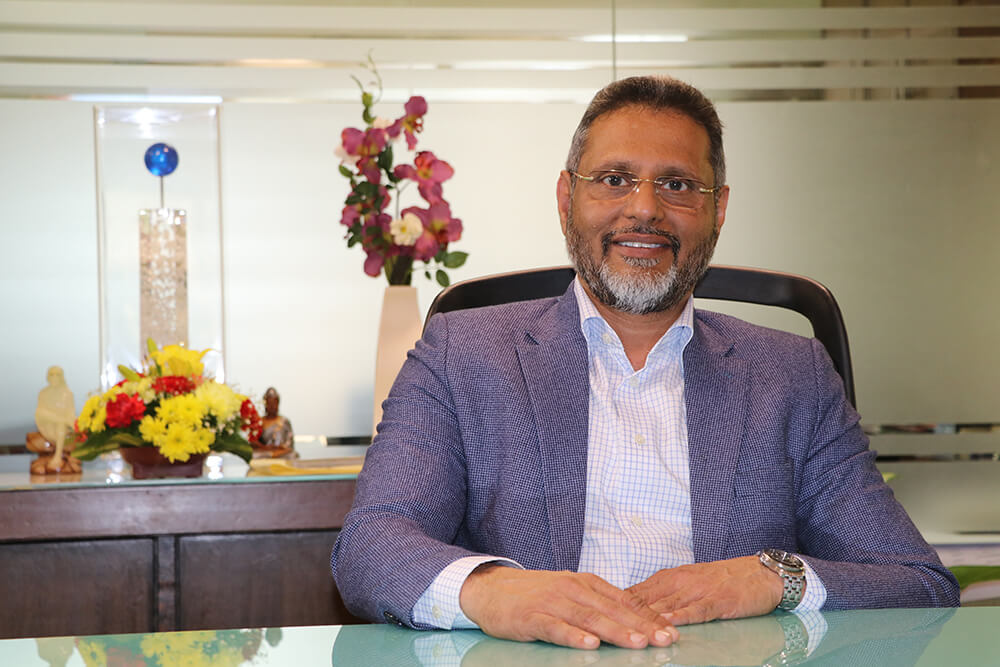
Dr. Aziz F Pathan

Professor and HoD,
Department of Artificial Engineering & Machine Learning
Jain Institute of Technology, Davangere
Email: azizkhan@jitd.in